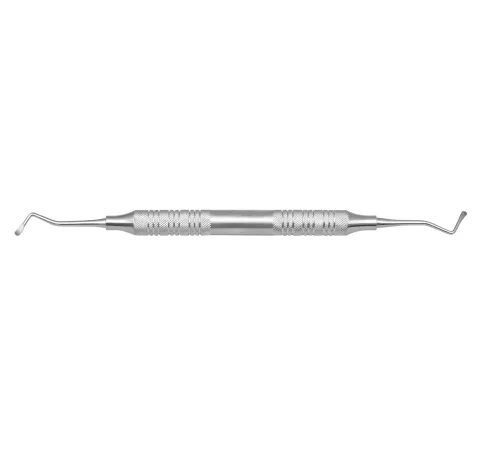
About Endodontic Excavator
A long-shank 1.5 mm spoon for your instrument list
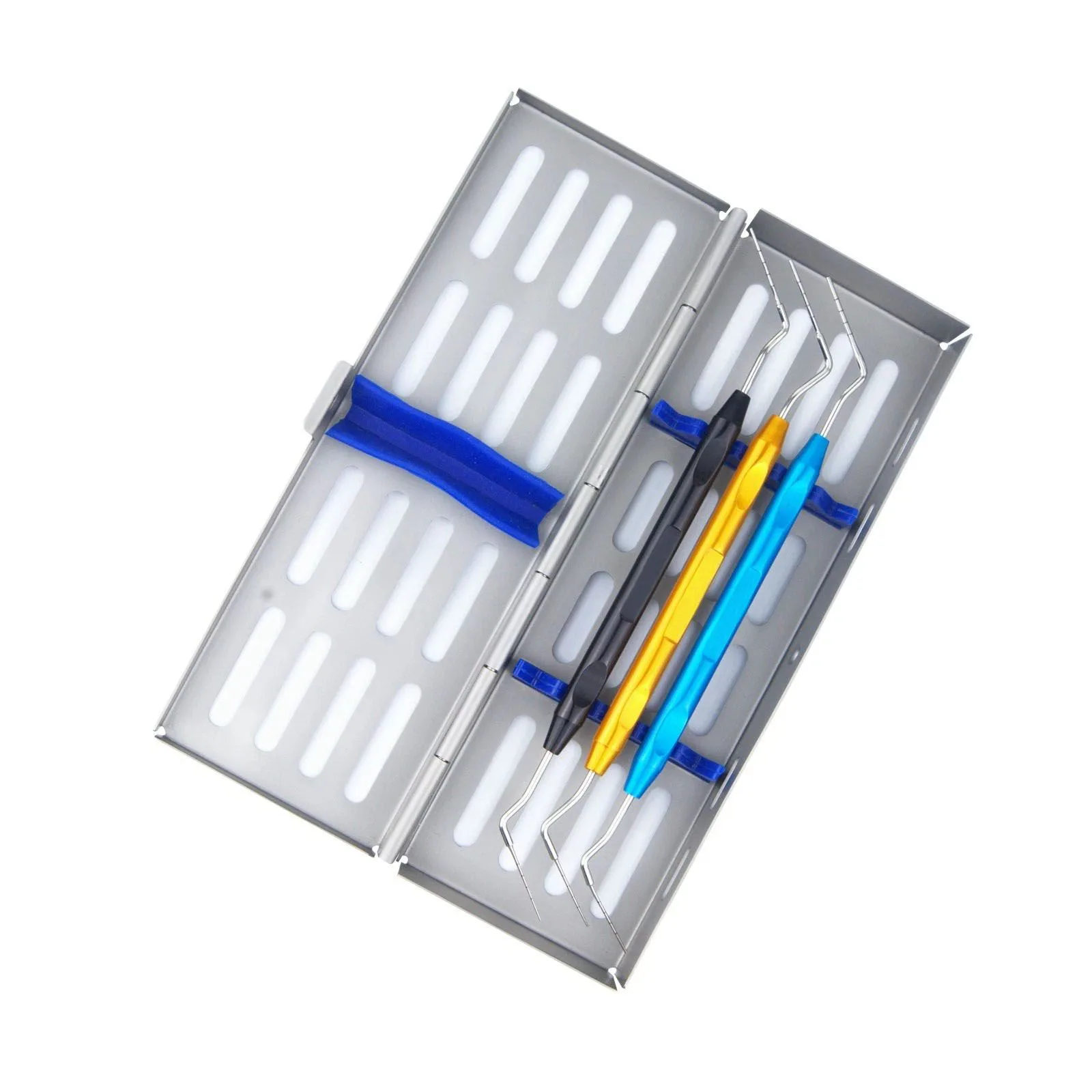
The Endodontic Excavator (SKU DIS-DEN-0217) is one double-ended stainless steel hand instrument with a small cupped spoon at each end. It has a 1.5 mm spoon reference, long offset necks and a hollow handle with a knurled grip. The 17.5 cm figure is the overall length of the whole instrument, not the length of the shank. The extended, angled neck sets this pattern apart from a standard spoon excavator because it carries the spoon further out from the handle. Match that geometry when you restock an endodontic tray.
- SKU: DIS-DEN-0217
- Configuration: one double-ended instrument, spoon at both ends
- Spoon reference: 1.5 mm
- Overall length: 17.5 cm
- Necks: long, offset and angled
- Handle: hollow, knurled grip
- Material: stainless steel
Why 1.5 mm alone won't identify the right replacement
A size label such as 1.5 mm refers to the working end. It doesn't tell you how long the terminal shank runs, where the neck bends or what angle the spoon makes with the shank. Instrument makers that offer both styles describe their endodontic excavators with extended lower shanks and sharper blade angles than their ordinary restorative spoons, even when both versions carry the same tip size in the product name. An ordinary 1.5 mm spoon excavator and this instrument can share that number and still hold the spoon in quite different positions relative to the handle.
When you compare, treat the shank and spoon as a single working end. Suppose the instrument you're replacing has a short, gently curved neck. In that case, this long offset pattern is a different tool and won't work as a like-for-like swap. If yours has a long neck that steps well away from the handle before the spoon, you're in the right family. The next step is to compare spoon shape and neck angle directly.
- Spoon reference: This instrument: 1.5 mm; Ordinary spoon excavator (general pattern): Offered in several sizes, including 1.5 mm
- Neck and shank: This instrument: Long, offset, angled; Ordinary spoon excavator (general pattern): Shorter terminal shank
- Working ends: This instrument: Spoon at both ends; Ordinary spoon excavator (general pattern): Varies by pattern
- What the size label tells you: This instrument: Working-end reference only; Ordinary spoon excavator (general pattern): Working-end reference only
Matching a familiar pattern in your cassettes
Cassette setups differ between practices, and the spoon a clinician expects to find is defined by its shape and shank as much as by its size. A model number copied from another brand is a weak basis for reordering, because products sold under similar codes by different makers don't necessarily share the same spoon, neck or handle. Comparing physical form works better. Put the instrument you have beside the photographs of this one and look at spoon shape, neck length and offset, and handle style.
It also helps to confirm that you need a spoon at all. A pointed explorer has a fine exploratory tip and serves a different purpose. A fixed diagnostic set groups several instruments together. Neither one replaces a single spoon-ended excavator.
Here is an example. A purchasing coordinator restocking four endodontic cassettes that hold two excavators each would request eight units of DIS-DEN-0217 in the 1.5 mm double-ended spoon configuration. They would give the clinic's delivery address and attach a photo of the instrument currently in those cassettes.
Handle construction and what to check on delivery
The handle is hollow, with a knurled surface along the grip. If your team keeps one handle type across a cassette, match on this detail the same way you match on spoon profile.
- A small spoon at each end, consistent with the 1.5 mm configuration you ordered
- Long, offset, angled necks that match the product photographs
- A hollow handle with a knurled grip
- 17.5 cm overall length
- A count that matches the quantity on your quotation
The instrument is stainless steel. If your purchasing specification calls for a particular steel grade, state it in your request so it can be checked against the stock offered before you order.
Requesting DIS-DEN-0217
Process the instrument according to the instructions that apply to it and to your facility's cleaning and sterilization equipment. Cleaning and sterilization are separate steps. If your sterilization staff need product-specific processing documentation, mention it in your enquiry so it can be handled together with the quotation.
To request a quotation, send us SKU DIS-DEN-0217, the 1.5 mm double-ended long-shank spoon configuration, your quantity and the delivery destination. If you're matching an instrument already in use, include a photo of it, ideally next to a ruler, so the spoon and neck can be compared. Quantity and packing are confirmed in the quotation.