Dental Elevators
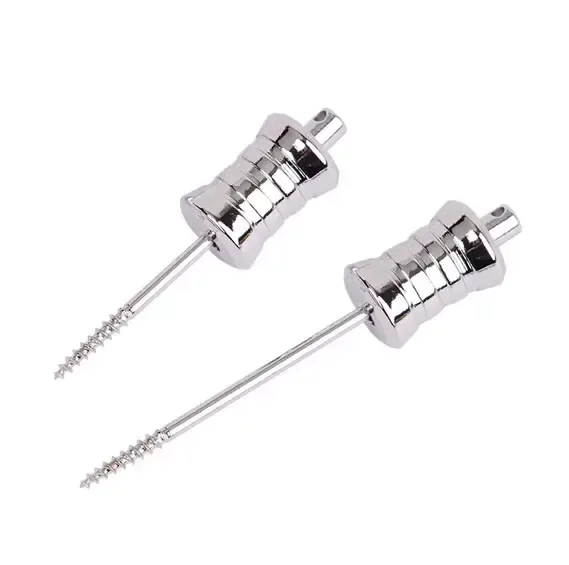
Dental elevators are selected by working-end geometry, width, curvature, side, shank, and handle. Compare straight, Cryer, luxating, root-elevator, and root-tip patterns without confusing them with periosteal elevators. Buyers can request individual instruments, matched left/right forms, defined sets, sample review, export packaging, and manufacturer-direct bulk pricing.
Dental Elevators Products
Compare current instruments in this category, including available variations, specifications, and quote options.
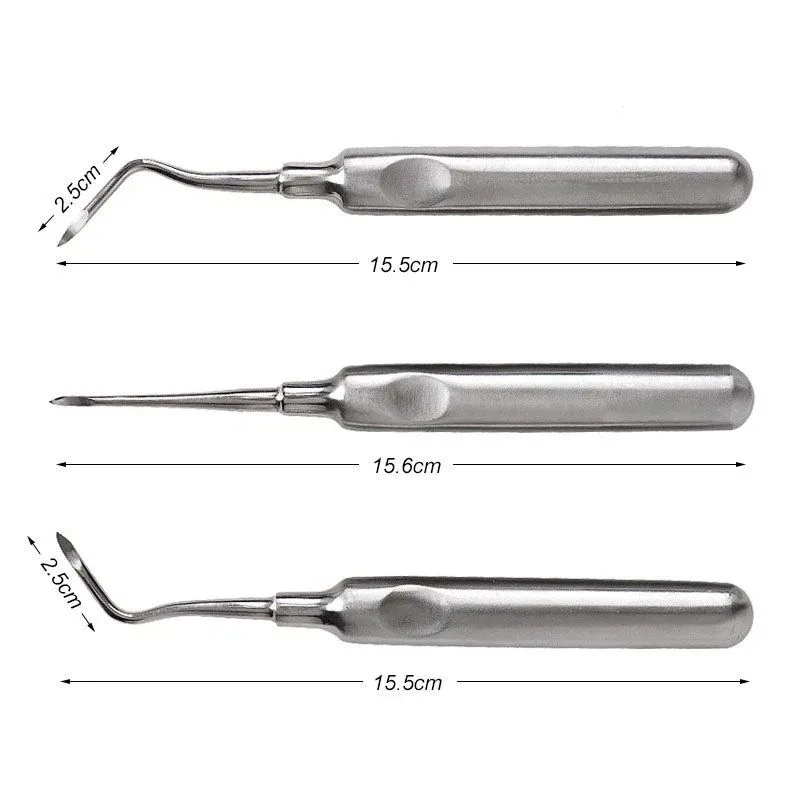
3-Piece Dental Elevator Set | Straight, Left & Right Cryer
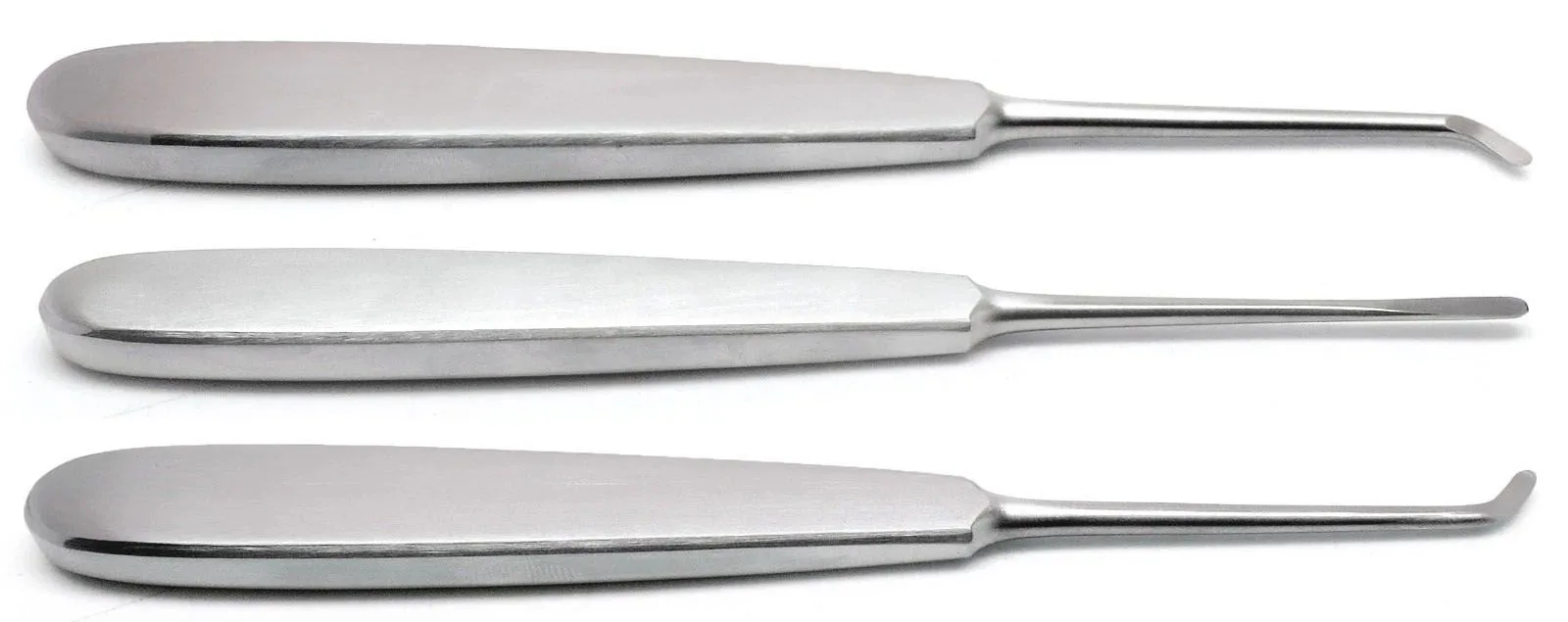
We supply this three-piece elevator set pairing a straight elevator with left and right Cryer elevators, covering initial tooth luxation and interradicular root retrieval from either side of the arch in one order. Tell us your required quantity and finish when requesting a quote.
Cryer Elevators
We manufacture left and right Cryer elevator patterns for retained-root and root-fragment removal, most often for mandibular molars, supplied individually or as a matched pair. Tell us whether you need the left instrument, the right instrument, or both when requesting a quote.
Dental Root Tip Pick Patterns
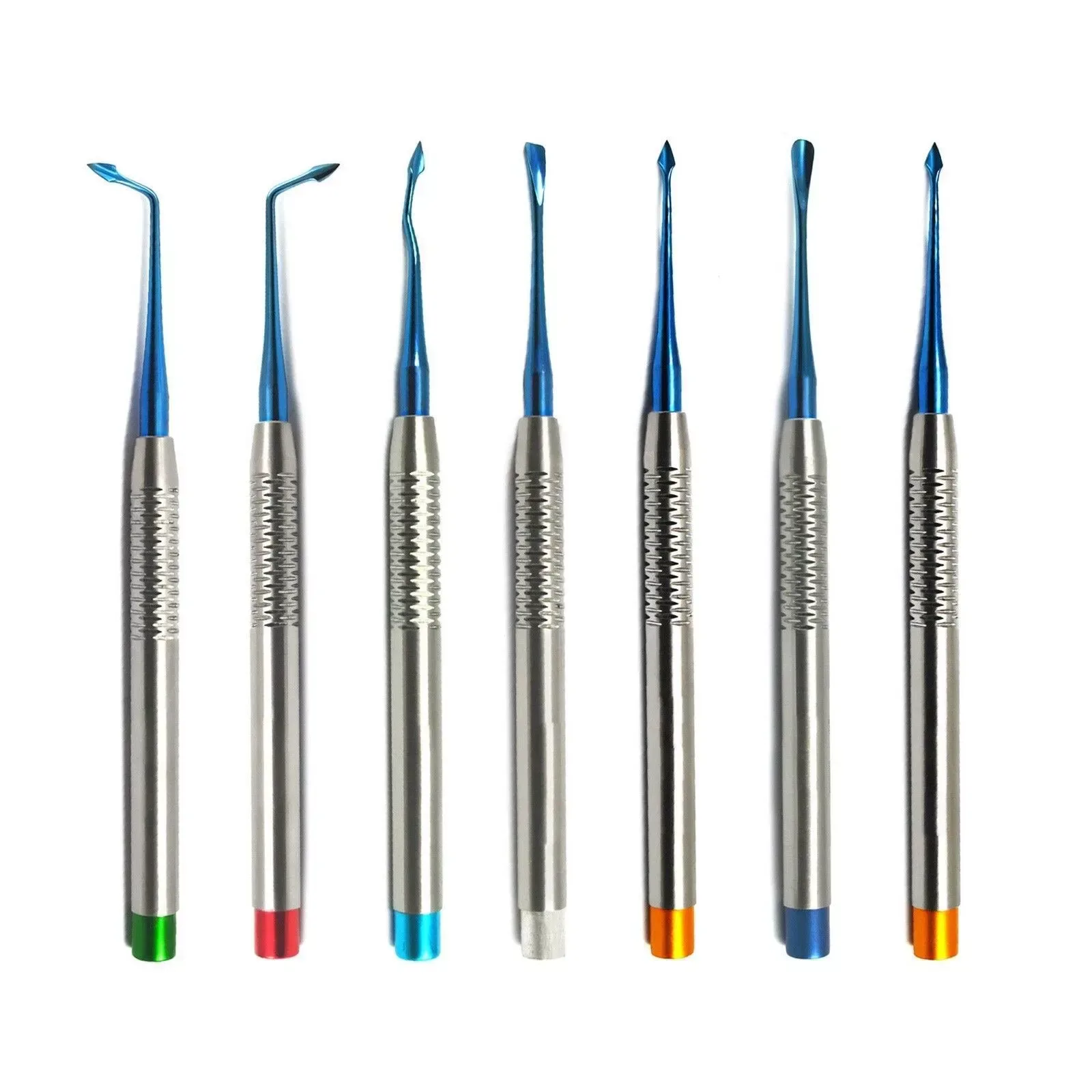
We manufacture root tip picks in straight, left, right, West, Howard, and apical patterns for retained-root retrieval sets, each a delicate instrument for restricted areas. Because direction matters on these fine instruments, tell us the tip direction, dimensions, and handle you need.
Periotome & PDL Luxating Elevator Sets
We supply periotome and PDL luxating elevator sets in cassette, 8-piece, and 13-piece configurations for periodontal-ligament access during extraction, with thin working ends for controlled entry. Tell us the working-end width, blade thickness, and instrument count you need when requesting a quote.
Root Elevators
We manufacture dental root elevators across straight, Cryer-style, fine root-tip, Bein, Coupland, Warwick James, Winter and related patterns. Tell us the figure, geometry and orientation you need — pattern names in this range identify different tip geometries and are not interchangeable.
Straight Dental Elevators
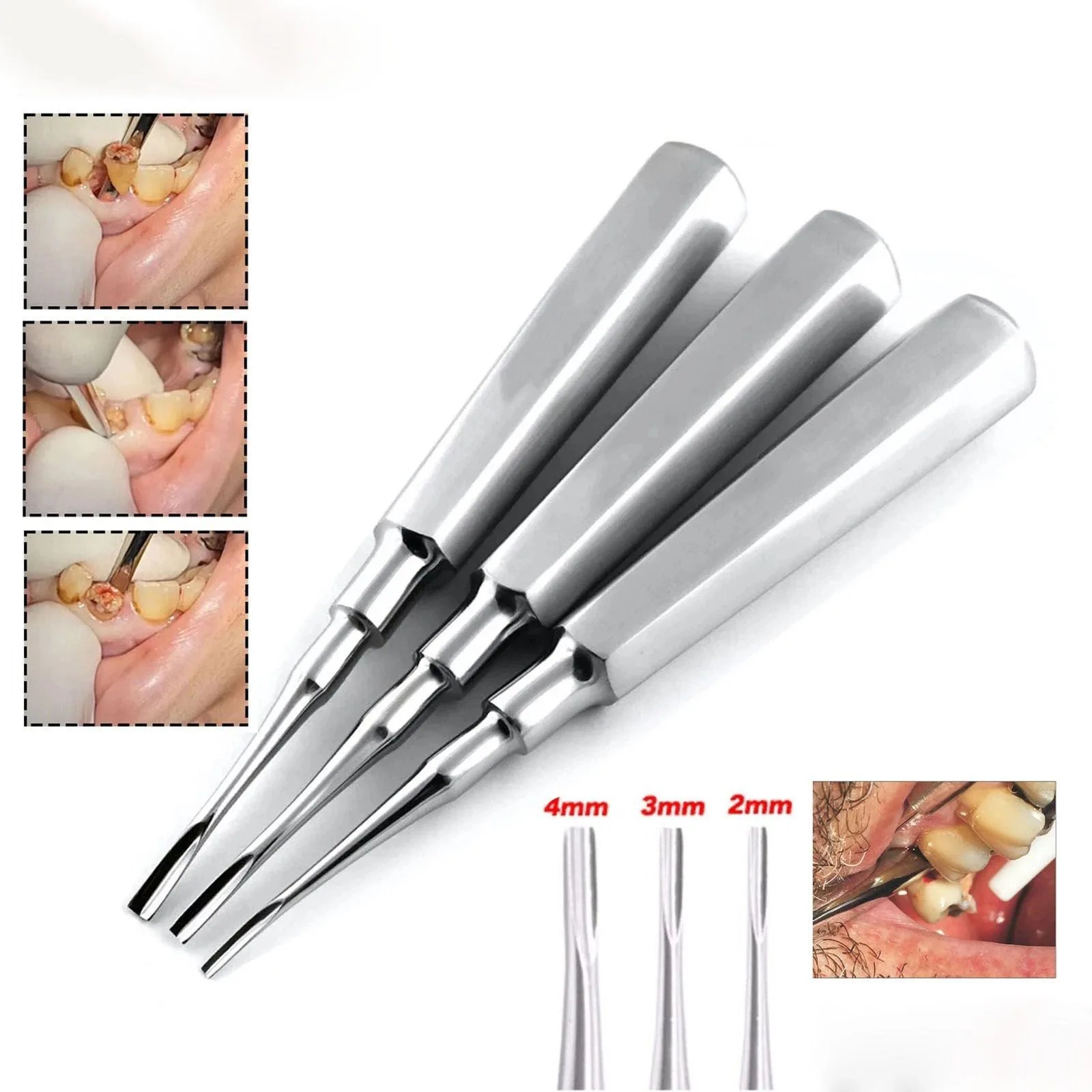
We manufacture straight dental elevators — Coupland, Bein, Flohr, London Hospital, and 301-style patterns — grouped by blade width and tip form. Tell us the blade width, tip form, and handle you need when requesting a quote, since these named patterns are not interchangeable.
Dental Elevators Buying Specifications
| Specification | Details |
|---|---|
| Families | Straight, Cryer, luxating/periotome, root elevator, and root-tip pick |
| Working end | Blade or tip width, thickness, curvature, side, and shank angle |
| Orientation | Straight, left, right, or paired, depending on the pattern |
| Handle | Pattern, diameter, texture, overall length, material, and finish |
| Order format | Individual references, matched pairs, three-piece sets, or buyer-defined assortments |
How to Choose Dental Elevators
Five Elevator Families, Five Different Buying Decisions
A straight elevator uses an inline working end; a Cryer pattern uses a triangular form and is commonly supplied in left and right orientations; a luxating elevator or periotome has a thinner working end; root elevators cover established pattern families with different shanks and tips; and a root-tip pick is designed as a finer retrieval instrument. These names describe geometry and category, not interchangeable labels.
Choose the family before comparing handles or finishes. If the instrument will replace an existing pattern, record its figure, working-end width, side, shank angle, and overall length. Buyers ordering a mixed extraction tray should list every elevator as a separate line rather than requesting an unspecified assortment.
- Straight elevators — Compare blade width, tip profile, shank, and handle in an inline design.
- Cryer elevators — Confirm pattern, size, and left/right orientation or matched pair.
- Luxating elevators and periotomes — Record thin working-end geometry, width, and handle; do not treat the terms as universal synonyms.
- Root elevators and root-tip picks — Use the exact pattern or figure and provide measurements for fine access designs.
Compare the Working End in Profile and From the Face
One photograph rarely shows enough detail. A buyer should be able to see the working end from the face and side, with a scale or dimensions for width and length. Curvature, bevel, tip thickness, shoulder, and shank transition influence how two similarly named patterns differ. Left and right patterns should be labelled independently.
The handle completes the specification. Note whether the buyer needs a solid, hollow, textured, or other verified handle pattern, along with overall length and marking. For a matched range, the handle choice should remain consistent across repeat orders unless a new sample is approved.
Dental Elevators and Periosteal Elevators Are Separate Categories
Dental and root elevators belong to the tooth and root instrument family. Periosteal elevators have broader or pattern-specific working ends intended for tissue reflection and belong under Surgical Instruments. Keeping those pages separate helps buyers find the correct geometry and prevents a periosteal pattern from appearing in a root-elevator comparison.
If an enquiry uses only the word “elevator,” add the intended family and pattern before pricing. A clear request might specify a straight dental elevator, a left/right Cryer pair, a root-tip pick, or a Molt periosteal elevator. Each description leads to a different product group.
Individual Instruments, Pairs, and Sets
Individual instruments are appropriate for replacement and specialized patterns. Cryer and other side-specific designs may be requested as a matched pair. The three-piece elevator set provides a defined combination, but its exact contents must be checked against the product listing before it is added to a procedure set.
For a buyer-defined set, send each pattern, size, side, handle, and quantity. Add cassette position, marking, packaging, and private-label needs where applicable. We can then confirm what is available and quote a repeatable composition.
What to Include in an Elevator Enquiry
Provide the family, pattern or figure, width or size, left/right orientation, handle, overall length if critical, quantity, and destination. If matching an existing instrument, include clear face and side photographs with measurements. Do not rely on a generic nickname when the geometry is important.
Our manufacturer-direct quotation can cover material and finish evidence, approved samples, packaging, branding, and export documentation. Reprocessing and inspection should follow the relevant product instructions and facility protocol. Product identification and procurement information do not replace clinical judgment or technique training.
For a mixed set, list every pattern on a separate line and identify pairs explicitly. State whether the cassette is required, whether replacement instruments must be available individually, and which dimensions are critical to acceptance. This creates a specification that can be checked against a sample and repeated on later orders.
What Can Be Confirmed Before You Order
We hold ISO 9001:2015 quality management certification, confirmed for the exact product range on request in your quotation enquiry.
Sialkot production workflow
Material selection, forming, heat treatment where required, grinding, finishing, inspection, marking, and export packing.
Material02Grade confirmed by SKU
Material and applicable steel grade are confirmed against the quoted pattern instead of applying one grade to every instrument family.
MOQ03Order-type minimums
Samples: 1-3 pieces per pattern; standard product orders: confirmed with your quote; mixed wholesale: 25 instruments (mixed patterns); OEM: 25 pieces per pattern.
Packaging04Protective and branded options
Individual pouches, procedure sets, cassettes, protective bulk cartons, product labels, and approved private-label packaging.
Export05Documented dispatch
Commercial invoice, packing list, protective outer packaging, and courier or freight tracking appropriate to the order.
Learn More About Dental Elevators
Helpful guides related to this category, product selection, instrument names, and sterilization workflows.
Dental Extraction Tray Setup and Instrument List
A practical dental extraction tray setup guide covering the core instruments for simple extraction and the additional instruments used in surgical and retained-root setups.
Read GuideChoosing Dental Extraction Forceps
How to choose dental extraction forceps by arch, tooth position, beak shape, root anatomy, handle style, and clinical workflow.
Read GuideHow to Evaluate Dental Instrument Quality
How to evaluate dental instrument quality before buying: stainless steel grade, forging method, finish, joint and hinge action, cutting-edge retention, tolerances, and certifications.
Read GuideDental Elevators FAQ
How does a Cryer elevator differ from a straight elevator?
A straight elevator has an inline working end. A Cryer pattern has a triangular working end and is commonly supplied in left and right orientations. They should be ordered by exact pattern and size.
Are a luxating elevator and a periotome always the same?
No. Supplier terminology can overlap, but working-end width, thickness, bevel, shank, and intended instrument family must be checked for the exact product.
Are periosteal elevators included in this category?
No. Periosteal elevators are tissue-reflection instruments and are listed under Dental Surgical Instruments.
What information is needed for a mixed elevator set?
List each pattern, size or width, side, handle, quantity, cassette requirement, marking, packaging, and destination.
Need Dental Elevators in Bulk?
Send your instrument list and quantities for manufacturer-direct pricing, custom branding, or mixed-category quotes.