About Dental Hoe Scaler
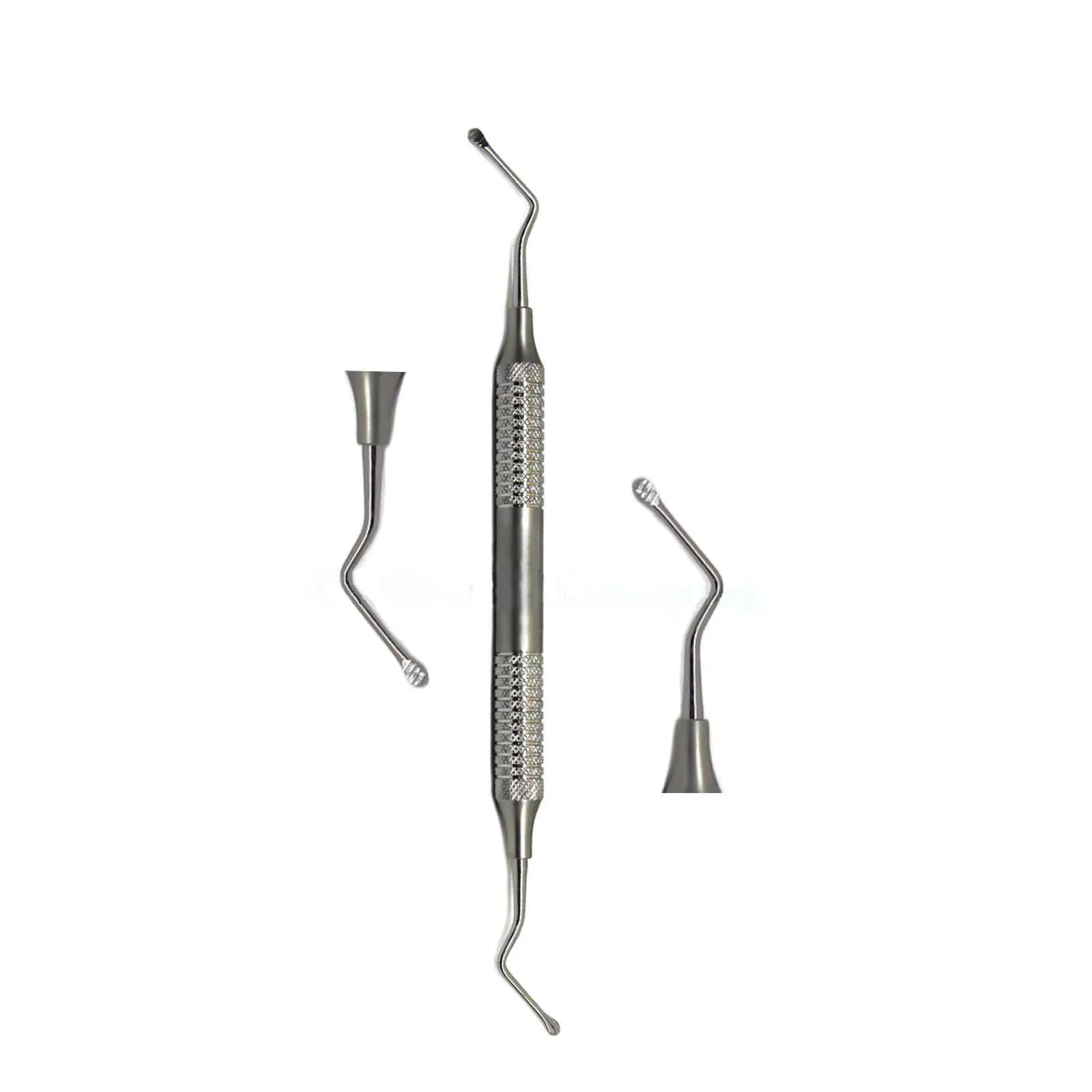
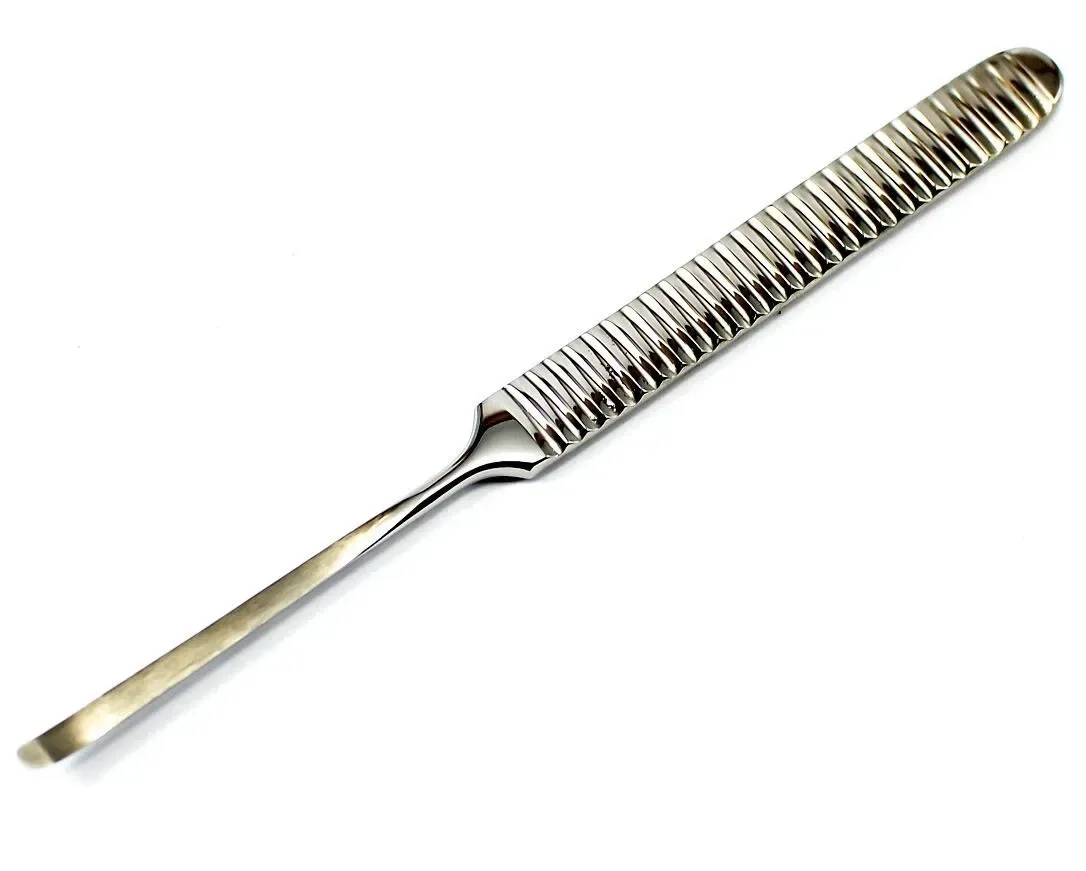
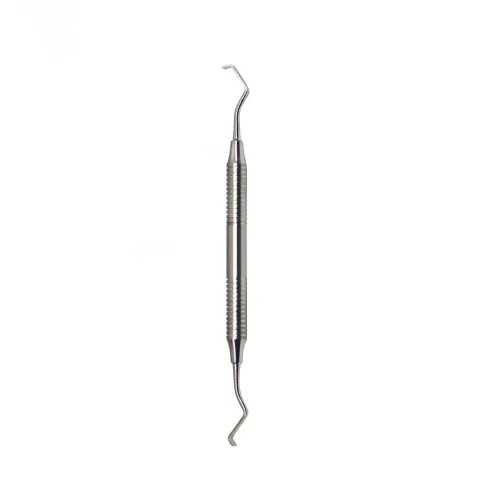
Each order unit is one double-ended dental hoe scaler, a manual hand instrument from the periodontal scaler family. A central handle carries a bent shank at each end, and each shank finishes in a short, flat working head turned over at the tip.
Telling a hoe from a sickle or curette
The working end is the quickest way to sort scaler families on a tray or a stock list. A hoe ends in a short, flat blade turned over like a garden hoe, and both ends of this instrument follow that profile. A sickle comes to a pointed tip, while a curette finishes in a rounded toe. If your stock mixes all three classes, our guide to dental scaler types and selection sets them side by side for visual comparison.
Both hoe heads in the close-up views
The nine photo views include close-ups of each end. Use them to compare the relative width of the two heads, the turn of each blade and the bend of each shank. Record the two working-end profiles on the stock label to help buyers match the pattern when reordering.
Matching an existing hoe scaler
When you replace an unmarked hoe, photograph both ends of the old instrument with the blades clearly visible and set the images beside the close-ups. If the head widths, blade turns or shank bends look different, or if length matters to your clinicians, add measurements of your current instrument to the purchase request with the quantity needed. Those photos and figures allow the pattern to be checked before purchase.