About Buser Periosteal Elevator
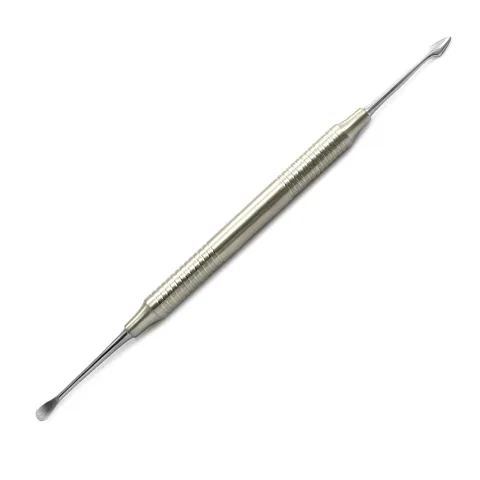
This Buser periosteal elevator is one double-ended instrument with a rounded, spoon-like end, a pointed leaf-shaped end and a textured central handle.
Recognizing the Buser pattern
Within the periosteal elevator family, the Buser pattern is identified by this pairing of ends. One side is broad and rounded with a gentle spoon curve, and the other narrows to a point with a leaf or spade outline. Seen together, the two ends give the instrument a distinctive silhouette in a mixed tray. Other named elevators pair different shapes, and our guide to periosteal elevator types explains how those patterns compare for buyers weighing their options.
What the close-up photographs confirm
The close-up images show the outline of each end, the transition from shank to handle and the texture running along the grip. Use them to check that each tip profile matches the instrument you hold now. If a replacement needs to match specific dimensions, include those measurements from the existing elevator in the order request.
Micro versions, named models and replacement quotes
Some manufacturers offer micro or size-specific Buser variants, and each size should be ordered as its own item. If your practice uses one of these, record the maker, the catalog reference and any width or length figures you need. A replacement quote built on that reference, together with a photo of both ends, gives the clearest basis for confirming whether this elevator meets the requirement.