About Root Canal Plugger
A blade and a plugger on one handle
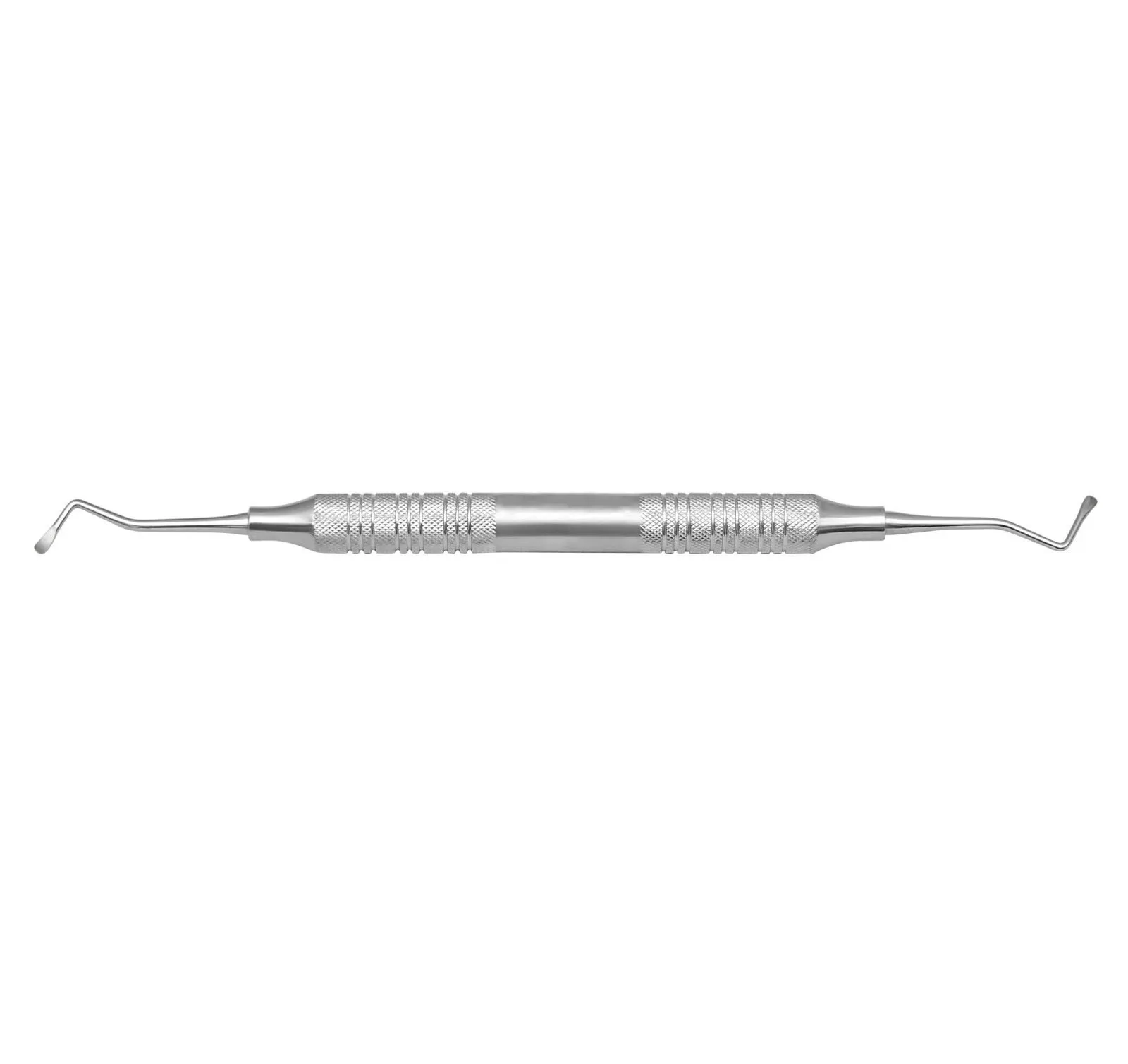
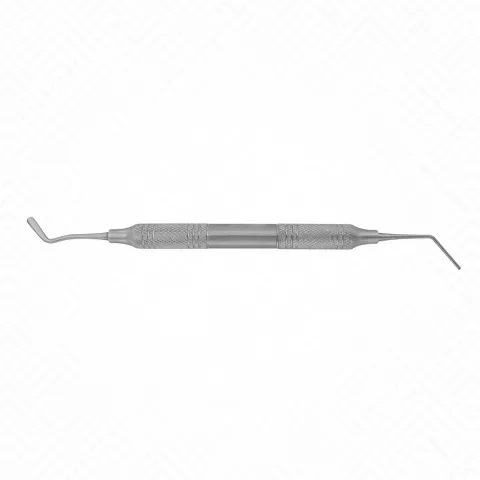
DIS-DEN-0214 is a manual, double-ended Glick #1 style instrument with two different working ends on one stainless steel handle. One end is an angled flat blade, sometimes called a paddle. The other end is an angled slender cylindrical plugger. The instrument measures 17.5 cm (about 6.9 in) overall. That is the length of the whole instrument, not the working length of either end, so keep the two separate when you compare it with your current trays.
The handle is all metal. It has knurled grip sections toward each end and a smooth center section between them. Because both ends share one handle, a blade and a plugger take up one place on the tray instead of two, and you turn the instrument around to reach the other profile. It is one piece with two working ends, not a pair of separate tools.
- SKU: DIS-DEN-0214
- Pattern: Glick #1 style, double-ended
- Working end 1: Angled flat blade (paddle)
- Working end 2: Angled slender cylindrical plugger
- Handle: All metal; knurled grips with a smooth center section
- Overall length: 17.5 cm (about 6.9 in)
- Material: Stainless steel
- Operation: Manual hand instrument
Blade and plugger, or two plugger sizes?
Double-ended root canal pluggers come in two broad arrangements, and the name on an invoice rarely tells you which one you have. Many patterns put a cylindrical plugger at both ends, each with a different diameter, so one handle carries a smaller and a larger compaction tip. The Glick #1 arrangement works differently. It combines two functions rather than two sizes. The flat blade gives you a broad, thin profile, and the slender cylinder gives you the narrow, blunt end of a plugger.
This difference matters when you replace a lost or worn instrument. A request for "a root canal plugger" could be filled by either arrangement. A clinician who reaches for a paddle and finds a second plugger tip has the wrong tool for their routine. Check the working ends of the instrument you want to replace. If one end is flat and blade-like and the other is a thin cylinder, this is the configuration to order. If both ends are cylinders of different thickness, you need a paired-plugger pattern instead.
The "1" in Glick #1 is a pattern number, not a tip measurement. Different makers publish different plugger diameters for their own versions, so the number alone does not confirm that two Glick instruments have matching ends. If fine geometry matters to your team, compare the working ends directly before you commit to a larger quantity.
Plugger, spreader or powered unit?
Pluggers and spreaders are easy to confuse on a supply list because both are slender hand instruments used in root canal obturation. The difference is at the tip. A plugger ends in a blunt, flat face designed for compacting filling material, while a spreader tapers to a point. If your instrument list calls for a spreader, this instrument is not a substitute, and the reverse is also true.
DIS-DEN-0214 is also a manual hand instrument, with no motor, battery, cord or heating element. Electric gutta-percha cutters, heated pluggers and backfill units are separate equipment purchases. If you are budgeting for a powered system, this instrument does not take its place.
Matching, restocking and reprocessing
A precise request makes it easier to restock several operatories or match an instrument a clinician already relies on. If you are matching another maker's Glick #1, include its reference number or a clear photo of both working ends, ideally beside a ruler. A photo helps us compare shape and proportion. It cannot confirm alloy or exact tip diameter.
DIS-DEN-0214 is a single blade-and-plugger configuration, not an assortment. If your tray calls for a multi-piece plugger assortment rather than this combination, the Endodontic Hand Plugger Set (3 pc) is a separate option worth comparing.
For reprocessing, follow the instructions for use that apply to the instrument and your facility's validated cleaning and sterilization process. Cleaning and sterilization are separate steps, and no single cycle applies to every instrument. Our guide to dental instrument cleaning and ultrasonic processing covers general background. If your program requires manufacturer documentation on file, mention it in your request so we can confirm what is available.
Send your request with the SKU, quantity, destination and any pattern reference. We will review it and prepare your quotation.