
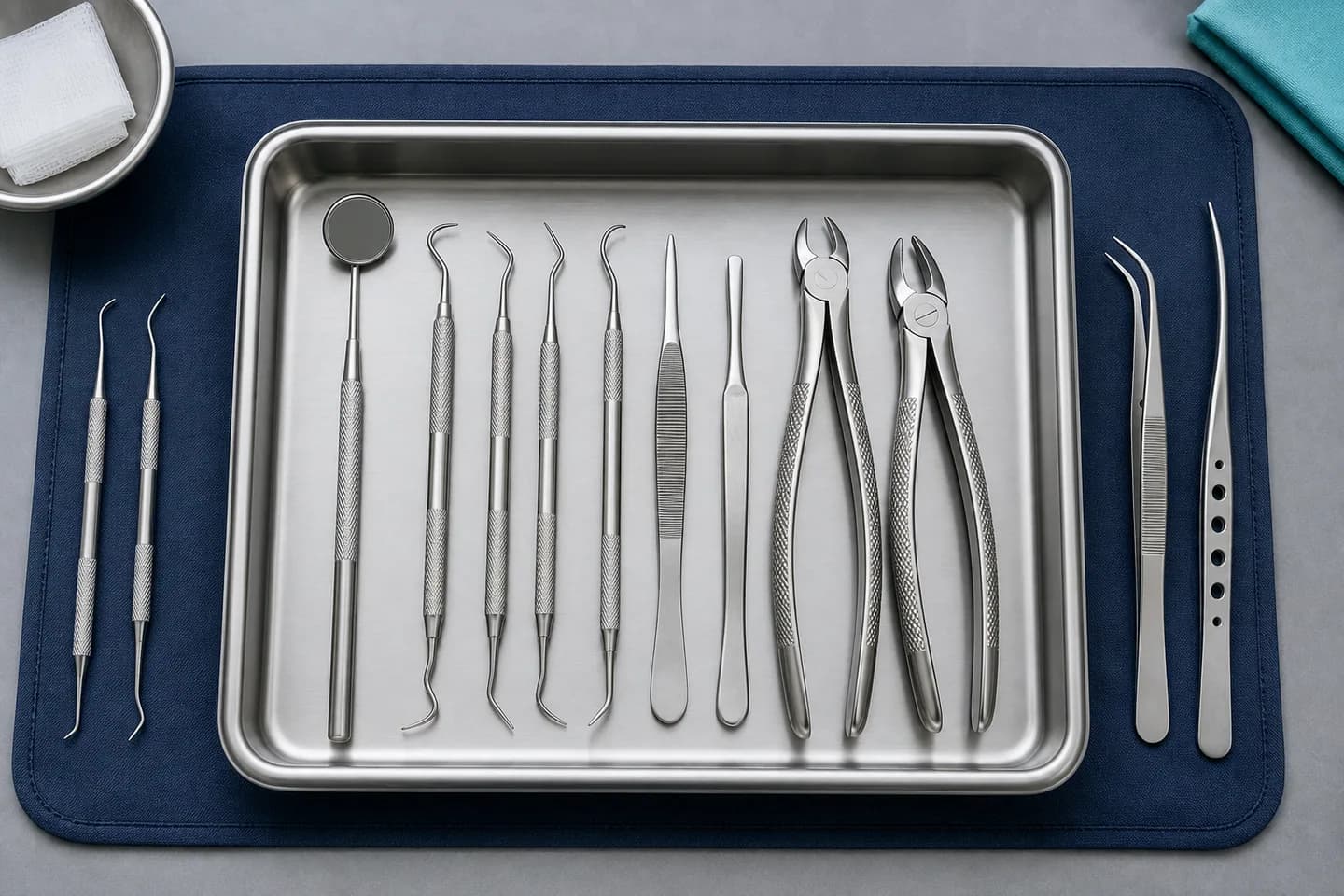
ISO 13485 is the international standard for a quality management system specific to medical devices, and for dental instruments it signals that a manufacturer controls design, production, and traceability to medical-device requirements. It is a stronger, more targeted signal than general quality certification because it is written for products used in patient care. This guide explains what ISO 13485 covers, how it compares to ISO 9001 and CE marking, and how to verify it.
What is ISO 13485 certification?
ISO 13485 is a standard that specifies requirements for a quality management system where an organization needs to demonstrate its ability to provide medical devices that consistently meet customer and regulatory requirements. For an instrument manufacturer, certification means an accredited body has audited its processes for design control, production, traceability, risk management, and corrective action. It is process certification of the manufacturer, not a test result for a single instrument.
ISO 13485 vs ISO 9001: what is the difference?
The difference is scope: ISO 9001 is a general quality management standard for any industry, while ISO 13485 is tailored to medical devices with added requirements for regulatory compliance, risk management, traceability, and documentation. A manufacturer may hold one or both.
| Aspect | ISO 9001 | ISO 13485 |
|---|---|---|
| Scope | General quality management, any industry | Medical-device quality management |
| Focus | Customer satisfaction, continual improvement | Safety, traceability, regulatory compliance |
| Risk management | General | Explicit, device-focused |
| Traceability | Encouraged | Required and documented |
| Best signal for | Consistent quality processes | Medical-device production control |
How does ISO 13485 relate to CE marking?
ISO 13485 and CE marking are related but distinct: ISO 13485 certifies the manufacturer's quality system, while CE marking indicates a product conforms to the applicable requirements for sale in certain markets. Many manufacturers use an ISO 13485 quality system as the foundation that supports CE conformity. Neither replaces the other; together they cover process control and product conformity.
Why does ISO 13485 matter for dental instruments?
ISO 13485 matters because dental instruments are used on patients, which makes them a YMYL (your money, your life) category where consistency and traceability are essential. Certification gives buyers evidence that the manufacturer controls materials, heat treatment, finishing, and inspection systematically rather than ad hoc. For clinics, schools, and distributors making bulk purchasing decisions, it reduces the risk of inconsistent instruments across a batch. It is one of several signals covered in our guide to evaluating dental instrument quality.
How to verify a manufacturer's ISO 13485 certification
Verify certification by asking for the certificate and checking its details rather than accepting a claim.
- Request a copy of the ISO 13485 certificate and note the certification body.
- Check the scope statement covers the relevant instruments and processes.
- Confirm the certificate is current and within its validity dates.
- Ask whether the same system supports CE conformity for the instruments you are buying.
- Cross-check with other quality signals: steel grade, forging, finish, and batch consistency.
You can review our own standards on the quality and certifications page.
Frequently asked questions
Is ISO 13485 the same as ISO 9001?
No. ISO 9001 is a general quality management standard, while ISO 13485 is specific to medical devices and adds requirements for risk management, traceability, and regulatory compliance. A manufacturer may hold one or both.
Do dental instruments need ISO 13485 certification?
Requirements depend on the market and how the instruments are classified. ISO 13485 is a strong quality signal for medical-device production, and many buyers prefer it alongside CE conformity, but ISO 9001 with CE conformity is also common for many instrument categories.
How do I check if an instrument manufacturer is certified?
Ask for the certificate, note the certification body, confirm the scope and validity dates, and cross-check with other quality signals such as steel grade, forging, and finish. Do not rely on a certification claim without documentation.
Want documentation with your order? Request a quote and ask for our certification details.