
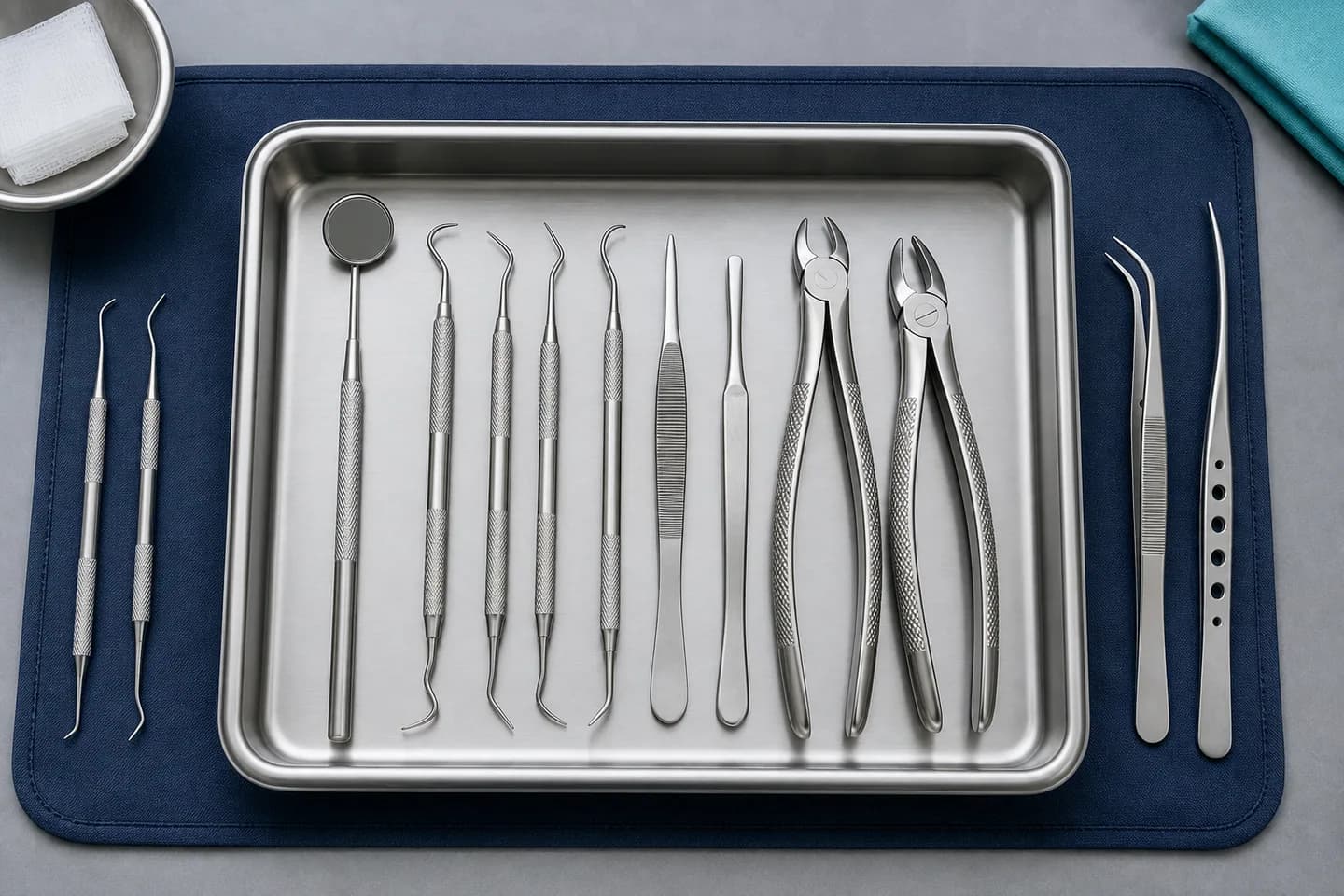
Sialkot, a city in Punjab, Pakistan, is one of the world's largest centers for hand-forged surgical and dental instrument manufacturing, producing a significant share of global supply. Its position comes from more than a century of accumulated craftsmanship, a dense network of specialist workshops, and export links to markets across North America, Europe, and the Middle East. This article explains how Sialkot became a capital of instrument making and what that heritage means for buyers.
How did Sialkot become a center for instrument making?
Sialkot's instrument industry grew from a metalworking tradition that was serving hospitals and missions by the late 19th and early 20th centuries. Local craftsmen who already produced surgical tools for regional medical facilities expanded during the following decades, and the skills passed from one generation of workers to the next. Over time the city built the raw-material access, tooling, and trained workforce needed to forge precision instruments at scale.
Why is Sialkot known for surgical and dental instruments?
Sialkot is known for instruments because it combines hand-forging skill, a concentrated supplier ecosystem, and export experience in one place. Several factors reinforce each other:
- Craftsmanship: forging, grinding, and finishing skills are concentrated in a large, experienced workforce.
- Supplier density: forging, heat treatment, grinding, polishing, and electroplating specialists sit close together, so instruments move quickly between stages.
- Pattern breadth: workshops collectively produce thousands of dental and surgical patterns, from mirrors and forceps to periodontal curettes and scissors.
- Export orientation: the city has long shipped to international markets and works to recognized quality and conformity standards.
What is the difference between Sialkot and other manufacturing regions?
The main difference is that Sialkot specializes in hand-forged instruments made by a deep pool of craftsmen, rather than only high-volume stamped production. Hand-forging aligns the steel grain and produces stronger instruments, which suits reusable professional patterns. Other regions compete on automated volume or brand distribution; Sialkot competes on craftsmanship and manufacturer-direct pricing. You can read more about the process in our guide to how dental instruments are made.
Does made in Sialkot mean high quality?
Origin alone does not guarantee quality; the manufacturer and its quality system do. Sialkot produces instruments across the full quality range, from budget stamped items to precision forged instruments made under ISO-controlled processes. The reliable signals are steel grade, forging method, heat-treatment control, finish, and documentation such as ISO 9001 or ISO 13485 and CE conformity. Our guide on how to evaluate dental instrument quality explains what to check before buying.
What does the Sialkot heritage mean for buyers?
For buyers, the heritage means access to a wide pattern range at manufacturer-direct prices, with the flexibility to request custom branding and specifications. Buying direct from a Sialkot manufacturer removes the importer and distributor markups added along a typical supply chain. It also means the people forging and inspecting the instruments are reachable for questions about patterns, materials, and finishes. Learn more about our roots on the Sialkot heritage page, or browse instrument categories.
Frequently asked questions
What percentage of surgical instruments come from Sialkot?
Sialkot is widely cited as producing a large share of the world's hand-forged surgical and dental instruments and is one of the leading global centers for this manufacturing. Exact figures vary by source and instrument category.
Are Sialkot dental instruments CE certified?
Many Sialkot manufacturers produce instruments carrying CE conformity and operate ISO 9001 or ISO 13485 quality systems. Certification depends on the individual manufacturer, so buyers should confirm documentation directly.
Can I buy dental instruments directly from a Sialkot manufacturer?
Yes. Buying direct removes distributor markups and allows custom branding and specifications. Request a quote with your instrument list to get manufacturer-direct pricing.