Manufacturing & Trust
These articles explain how the instruments are actually made and how to verify a manufacturer's claims — forging and finishing steps, steel-origin comparisons, Sialkot's manufacturing history, and how to read a certification like ISO 13485.
Manufacturing capability and process
Manufacturing process
Forging, heat treatment, grinding, and inspection.
Verifying claims
Steel origin, certification scope, and what to ask a supplier to confirm.
Related: Quality & Certifications · Procurement Evidence Center
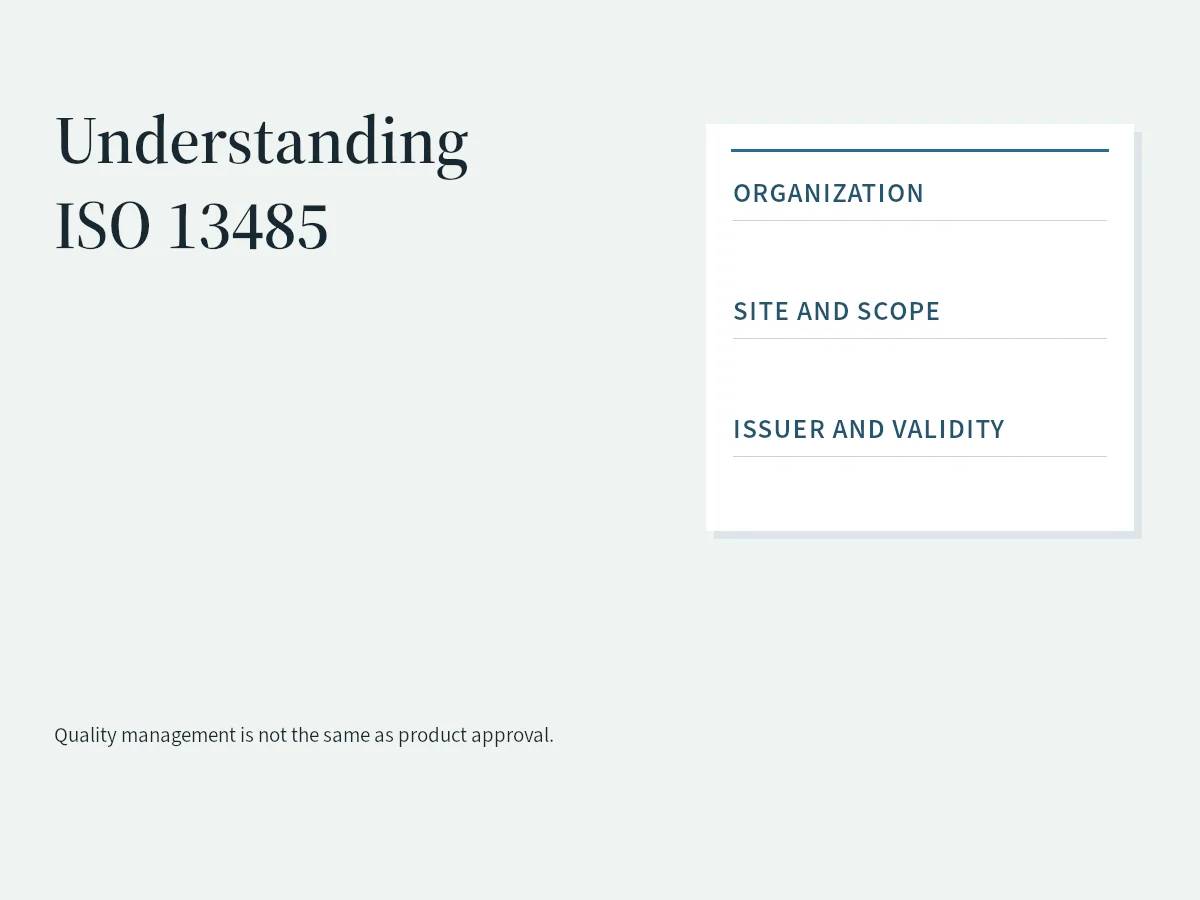
Understanding ISO 13485 Certification for Dental Instruments
What ISO 13485 means for dental instruments: how it differs from ISO 9001, why it matters for medical-device quality, and how to verify a manufacturer’s certification before buying....
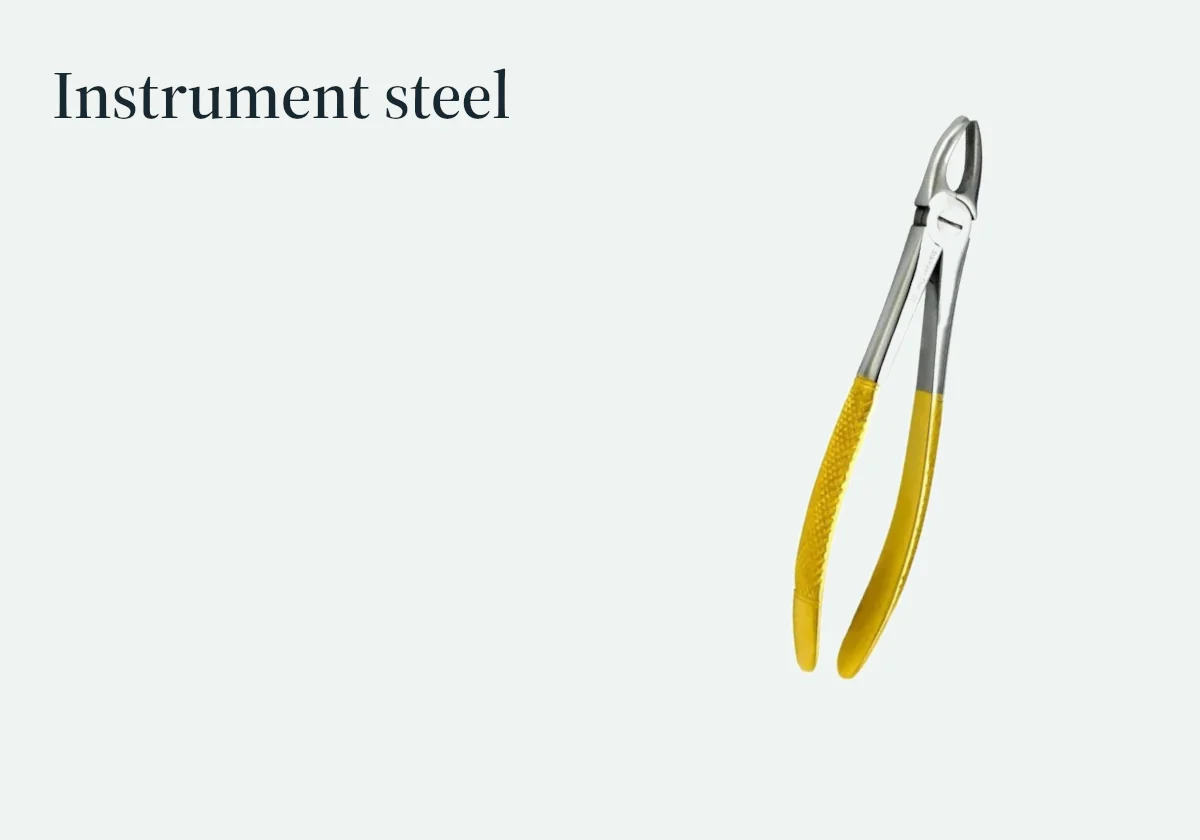
German Stainless Steel vs Japanese Steel in Dental Instruments
German vs Japanese stainless steel in dental instruments: how the two traditions differ in hardness, edge retention, and corrosion resistance, and which matters for forceps, scalers, and scissors....
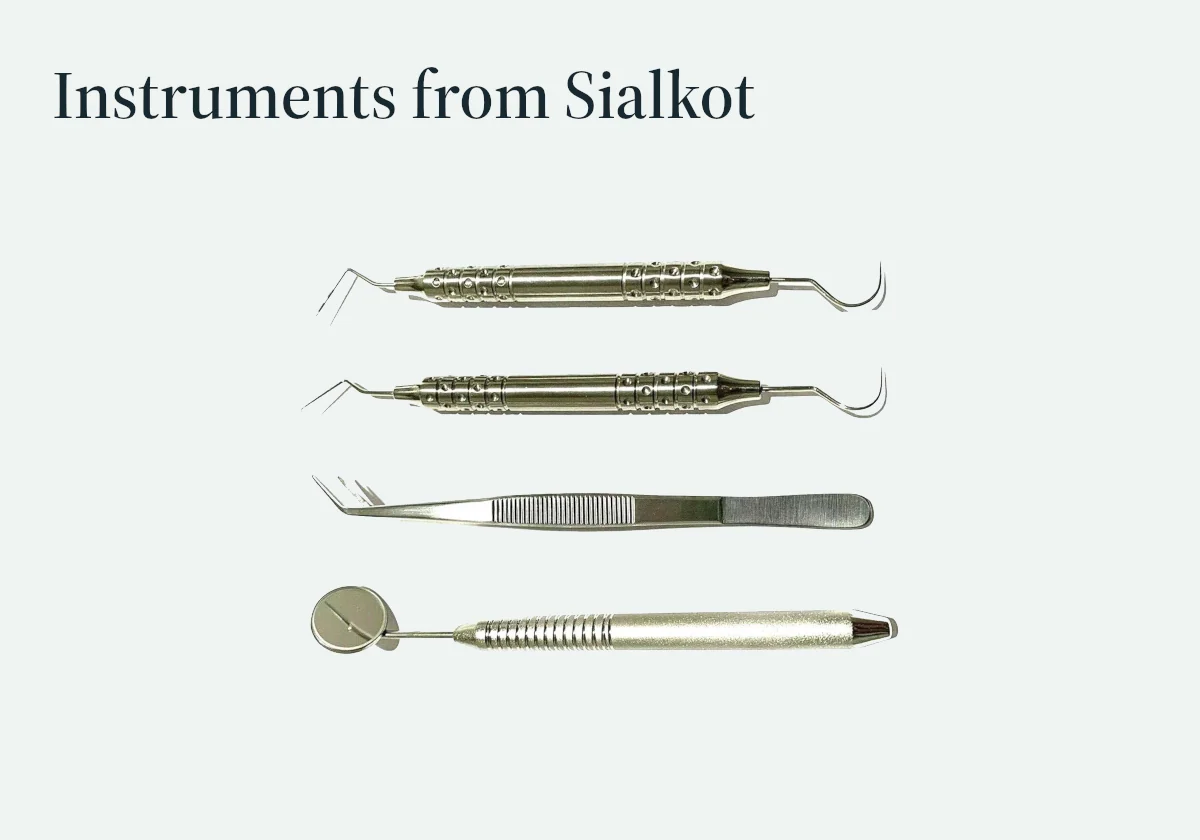
Sialkot: The World Capital of Surgical & Dental Instruments
Why Sialkot, Pakistan produces a large share of the world’s surgical and dental instruments: two centuries of hand-forging heritage, a dense supplier network, and the craftsmanship behind manufacturer-direct pricing....
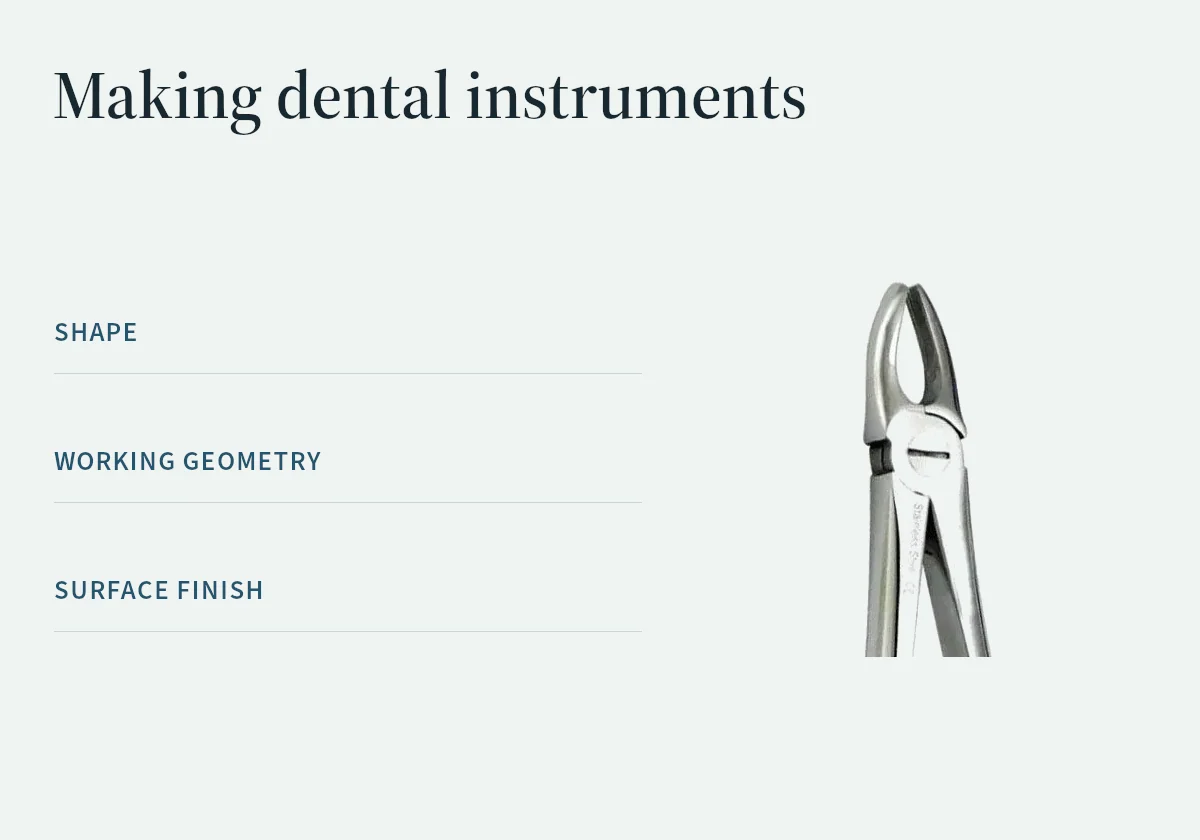
How Dental Instruments Are Made: From Raw Steel to Your Practice
How dental instruments are made, step by step: steel selection, hand forging, heat treatment, grinding, passivation, and the quality checks that separate a durable instrument from a disposable one....
Frequently asked questions
Which article helps me understand a certificate rather than a steel label?
Use the ISO 13485 article for quality-management certification terminology. Use the German/Japanese steel comparison for material-description questions, and the manufacturing article for production stages. They address different evidence: organization systems, material specification and the instrument manufacturing process.
Where can I find business-specific evidence after reading these background articles?
The Procurement Evidence Center and Quality & Certifications pages are the business-specific routes. Use the articles to decide which document and product scope you need to examine, then check the actual evidence supplied for the manufacturer or order. Regional history and general manufacturing descriptions serve as background.
Need Expert Guidance?
Contact our team for personalized instrument recommendations and manufacturer-direct pricing.
Request a Quote