Restorative Instruments

Sectional Matrix Ring-Placement Forceps

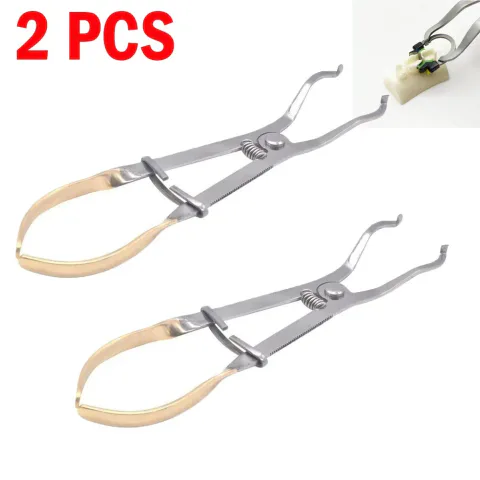
Sectional matrix ring-placement forceps with spring handles and angled jaws, for opening a separating ring and seating it over the matrix and wedge. Rings are sold separately.

Product code
DIS-RES-MAT-RING
Size
Standard forceps; dimensions confirmed in your quotation
MOQ
confirmed with your quote

Courier delivery. We ship through DHL, FedEx or another available courier, depending on your destination. We confirm the courier, shipping cost and estimated delivery time with your order. Shipping details

About Sectional Matrix Ring-Placement Forceps

Sectional matrix systems use a spring ring to hold a thin matrix against the tooth and separate it slightly from its neighbour, which helps you build a tight contact in a posterior filling. Ring-placement forceps open the ring, carry it into position and release it over the matrix and wedge. Ours have spring handles and angled jaws.

Matching the forceps to your rings

The jaw tips engage holes or notches on the ring, and ring designs vary. Before ordering in quantity, tell us the ring system you use and check a sample against your rings. The forceps are sold on their own; rings, matrices and wedges are separate.

Ring forceps or a Tofflemire retainer?

A sectional matrix covers one side of the tooth and is held by a ring. A Tofflemire matrix retainer holds a band that wraps around the whole tooth. Many practices use both, depending on the cavity.

Ordering

  • Order by quantity.
  • Evaluation samples of 1–3 pieces per pattern are available to check ring fit.

Care

Check the jaw tips and spring before use. Follow the supplied processing instructions and your facility's validated protocol.

See all restorative instruments.
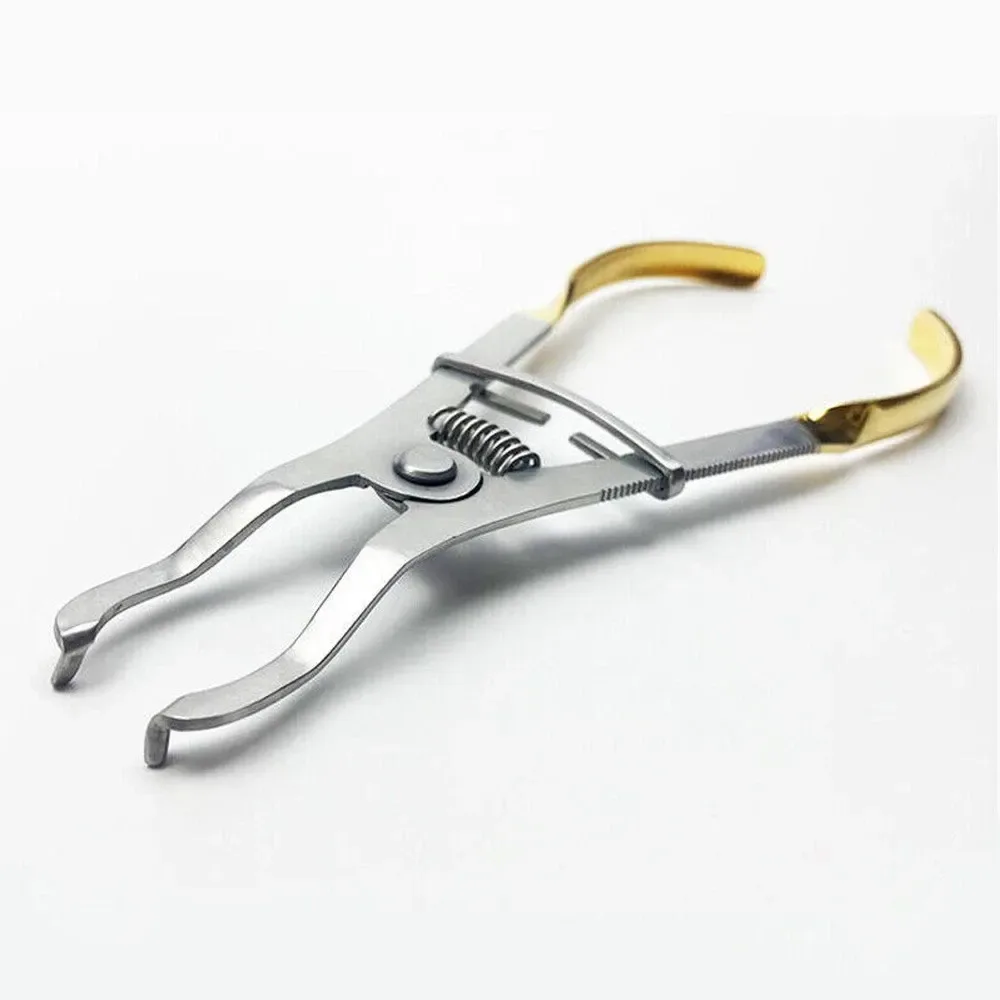
Buyer selection guide: matching ring forceps to your rings

These spring-handle forceps open a separating ring, carry it into position and release it over the matrix and wedge. The ring then holds the matrix and helps you build a tight contact. Use the photo key and the matching card below to send one complete enquiry for your ring system.

What the photo shows

The photo shows one complete forceps on its own. No ring, matrix or wedge is pictured or included.

One sectional matrix ring-placement forceps with angled tips at lower-left, central pivot and coil spring, a crossbar between the arms and handle ends at upper-right

One complete sectional matrix ring-placement forceps, with the working tips at lower-left.

  1. Angled tips

    The two opposing tip ends at lower-left engage the holes or notches on your ring.

  2. Pivot and coil spring

    At the centre, where the arms cross. The coil spring gives the spring-handle action.

  3. Crossbar

    A bar spanning the arms behind the spring.

  4. Handle ends

    At upper-right, where you hold the instrument.

Ring-matching enquiry card

Send these details together in one quote request. We can then compare your ring with the tip shape and opening of these forceps before you order in quantity. A sample checked against your own rings is the clearest way to confirm the fit.

Details to include when matching these forceps to your rings
DetailWhat to send
Ring system and part referenceManufacturer, system name and the ring's part or catalogue reference
Engagement-point close-upA sharp photo of the ring's holes or notches, taken end-on and from the side
Your current forceps tipsFront and side views of the tips on forceps that already fit your rings, if you have them
Usable opening neededHow far the ring must open, in millimetres, and the point where you measured it
Forceps quantityNumber of complete forceps. For example: 2 sample forceps first, then 10 for the practice
Other componentsLeave rings, matrices and wedges out of the forceps quantity. These forceps are supplied on their own

Ring forceps or Tofflemire retainer: which component each controls

Many practices keep both instruments because each one controls a different part of the matrix setup.

Component each instrument controls
Point of comparisonSectional matrix ring forcepsTofflemire matrix retainer
Component handledSeparating ring for a sectional matrixCircumferential matrix band
Matrix coverageOne side of the toothWraps around the whole tooth
Working featuresSpring handles and angled jawsSlotted head, locking knob and tightening knob
Order unitOne complete forcepsOne retainer
Not includedRings, matrices and wedgesMatrix bands
What to check on a sampleRing engagement points against the tip shape and openingYour bands against the slotted head
Have experience with Sectional Matrix Ring-Placement Forceps?Share verified buyer or evaluator feedback. It takes about a minute.

Sectional Matrix Ring-Placement Forceps Questions

What component do sectional matrix ring forceps handle?

They handle the separation ring in a sectional matrix system. The ring, the matrix band and the wedge are separate components with different functions, so identify these forceps by their ring-engaging working end, not as tweezers for placing the matrix band.

How do ring forceps differ from a Tofflemire retainer?

Ring forceps handle a sectional separation ring, while a Tofflemire retainer holds and adjusts a circumferential matrix band. The difference is the component each tool controls, so ring forceps do not replace the band-retaining mechanism of a Tofflemire.

What determines whether a ring and forceps fit together?

The ring's engagement points have to match the forceps' tip shape and usable opening, and a shared "sectional matrix" label does not establish that interface. Compare the ring and forceps references as a matched system; compatibility stated for another manufacturer's forceps does not establish fit for this instrument.

What does the spring-handle form tell me about this instrument?

The instrument has spring handles, angled jaws and a crossbar. The jaws provide the ring contact, and the spring-handle form describes the handle action. Those visible features identify the handling design; they do not establish a locking mechanism or a calibrated ring-opening force.

When forceps are sold as a "pair," does that mean two complete instruments?

Not necessarily. A pair of forceps can mean one complete instrument with two opposing working arms, which is different from two forceps, meaning two complete instruments. The terminology helps when you compare quotations, but it does not settle the pack quantity, so the number of complete instruments has to be stated separately.

WhatsApp