About Surgical Mallet
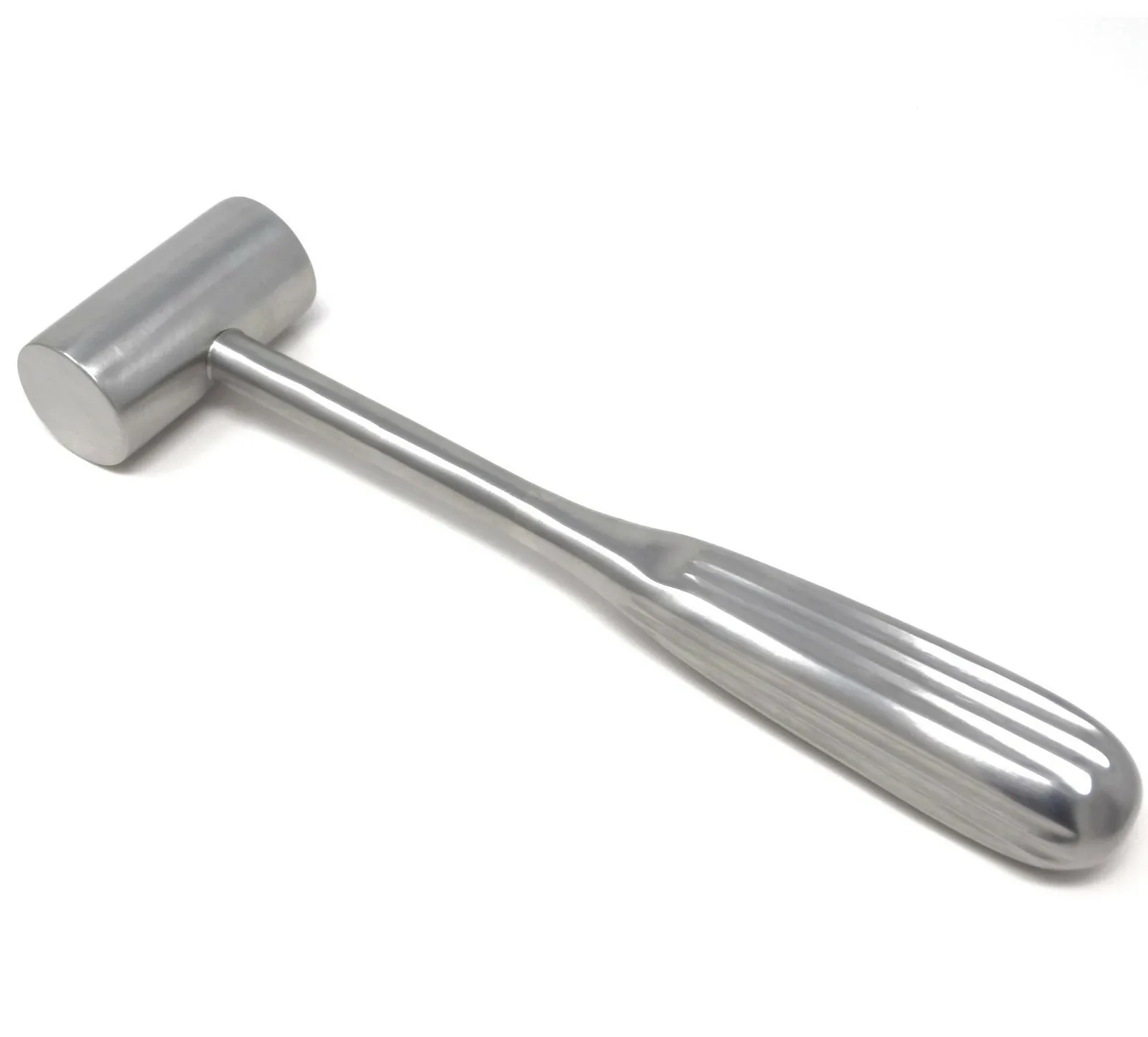
The Surgical Mallet (DIS-DEN-0208) is an all-metal stainless steel mallet with two flat striking faces, offered at 7.5 inches overall with a listed weight of 250 g. It gives dental and oral-surgery teams a bare-steel striking instrument to use alongside chisels, osteotomes and gouges on a surgical tray. Many mallets share similar lengths but differ in how their heads are faced, so check face construction as well as size when you replace a tray instrument or write a new specification.
Two steel faces, one shaped grip
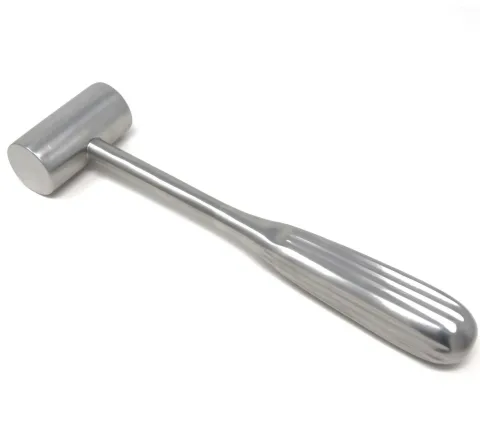
The head is a metal cylinder with a flat striking face at each end. Neither face has a nylon or plastic cap, so both ends present bare metal. A long metal shaft runs from the head to a fluted, sculpted grip. That grip profile is easy to tell apart from a plain round handle.
These features make a useful first comparison against the mallet you already use. Set your current mallet, or a photo of it on the tray, beside our product image and check three points: are both faces metal, is the head a straight cylinder, and is the grip shaped rather than smooth? A visual match narrows the choice but does not confirm the manufacturer's model. If your existing mallet has capped faces, it belongs to a different construction family, and choosing this model changes your specification rather than replacing the old instrument directly. Agree that change with the clinicians who use the tray before you order.
Read length, weight and face type together
- SKU: DIS-DEN-0208
- Overall length: 7.5 in
- Listed weight: 250 g
- Striking faces: Two flat metal faces, no caps
- Material: Stainless steel
- Grip: Fluted, sculpted handle
Length alone does not identify a mallet. Suppliers offer 7.5-inch mallets with bare steel heads, nylon-capped heads and other head designs, and weights vary between those patterns. Read the values in this table as one specification instead of checking only the figure on your purchase record.
The 250 g figure is the listed weight for this mallet. If your current record gives a head-only weight, compare like with like. A different length, a different weight on the same basis or capped faces usually means a different model, so raise it with your team before ordering.
Pairing it with chisels, osteotomes and gouges
A surgical mallet works as half of a pair. You use it with a companion instrument designed to be struck, such as a surgical chisel, osteotome or gouge. The treating clinician decides which companions and which technique suit the case. Not every hand instrument is made to be struck with a mallet, so confirm that each instrument you pair with this one is designed for that use.
For purchasing, the main question is face construction. Some practices use metal-faced mallets on all their surgical trays. Others specify nylon- or plastic-capped versions. Both are established designs, and this product is the metal-faced option. You can compare chisels, osteotomes and gouges in our surgical instruments range.
Quoting, replacing and processing
To request a quotation, send SKU DIS-DEN-0208 with the quantity you need. If the mallet replaces an instrument already on your tray list, include a reference to it: the line from your instrument list, any part number on your record and, ideally, a photo of the current mallet. A photo shows us right away whether you are moving from a capped mallet to a metal-faced one, while the part number helps identify the model you are replacing. If your tray needs other instruments alongside the mallet, list them in the same request.
Clean and process the mallet according to the manufacturer instructions that apply to this item and your facility's validated workflow for stainless steel surgical hand instruments. Do not carry over settings written for a capped or otherwise different mallet design. Our guide to dental instrument cleaning and ultrasonic processing covers broader workflow points.